The same apartment, two entirely different renovations. The most common mistake we see with owners preparing to rent: they renovate to look "generally nice" and only afterwards decide how they will let it. In practice, the rental model drives almost every decision — from material choice to the number of power sockets.
The core difference: intensity of use
An Airbnb apartment typically sees 50–100 guest turnovers a year. Every arrival means another clean, suitcases on the floor, and someone who does not treat the flat as their own. In long-term rental that number is 1–2 a year — the tenant lives there, and looks after the place accordingly.
That single difference runs through the whole project. For Airbnb, durability is the deciding factor; for long-term rental, what matters more is how cheaply and quickly the flat can be refreshed between tenants.
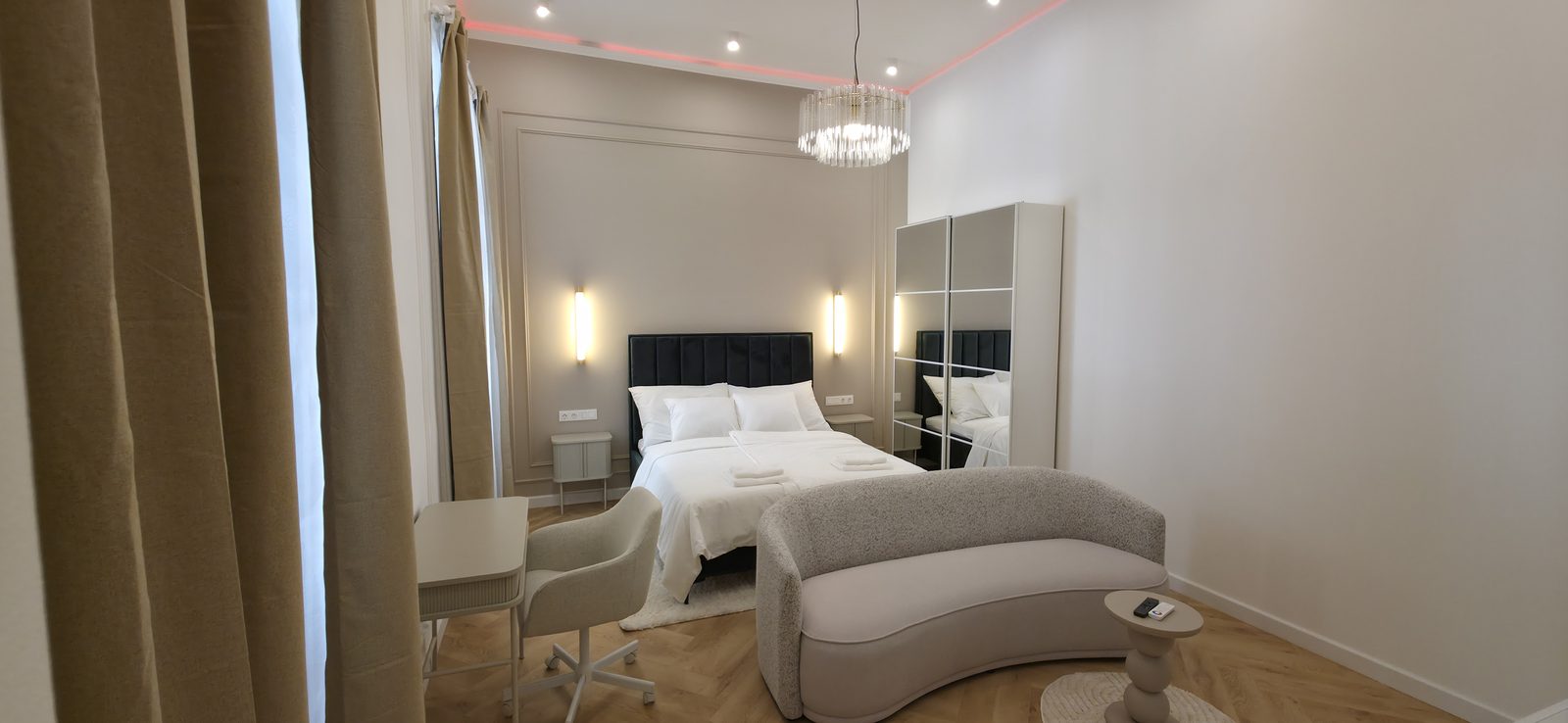
Materials: where not to economise
In an Airbnb, the floor and the bathroom take the most punishment. Floors are usually porcelain tile or laminate in a high wear class; in wet rooms, slip resistance (R9 or higher) is a baseline requirement rather than an option. Washable paint on the walls pays for itself: between seasons you simply repaint instead of re-skimming.
For long-term rental the same logic applies more loosely. Here it matters more that surfaces stay neutral and easy to repair — a plain painted wall can be patched at any time, a bespoke wallpaper cannot.
| Factor | Airbnb | Long-term rental |
|---|---|---|
| Turnovers per year | 50–100 | 1–2 |
| Flooring | Porcelain / high wear class | Good-quality laminate is enough |
| Furnishing | Complete, down to cutlery and towels | Basics: kitchen, appliances, some storage |
| Weight of design | Critical — it is the listing | Secondary; condition matters more |
| Operations | Daily | A few times a year |
Furnishing: the biggest gap
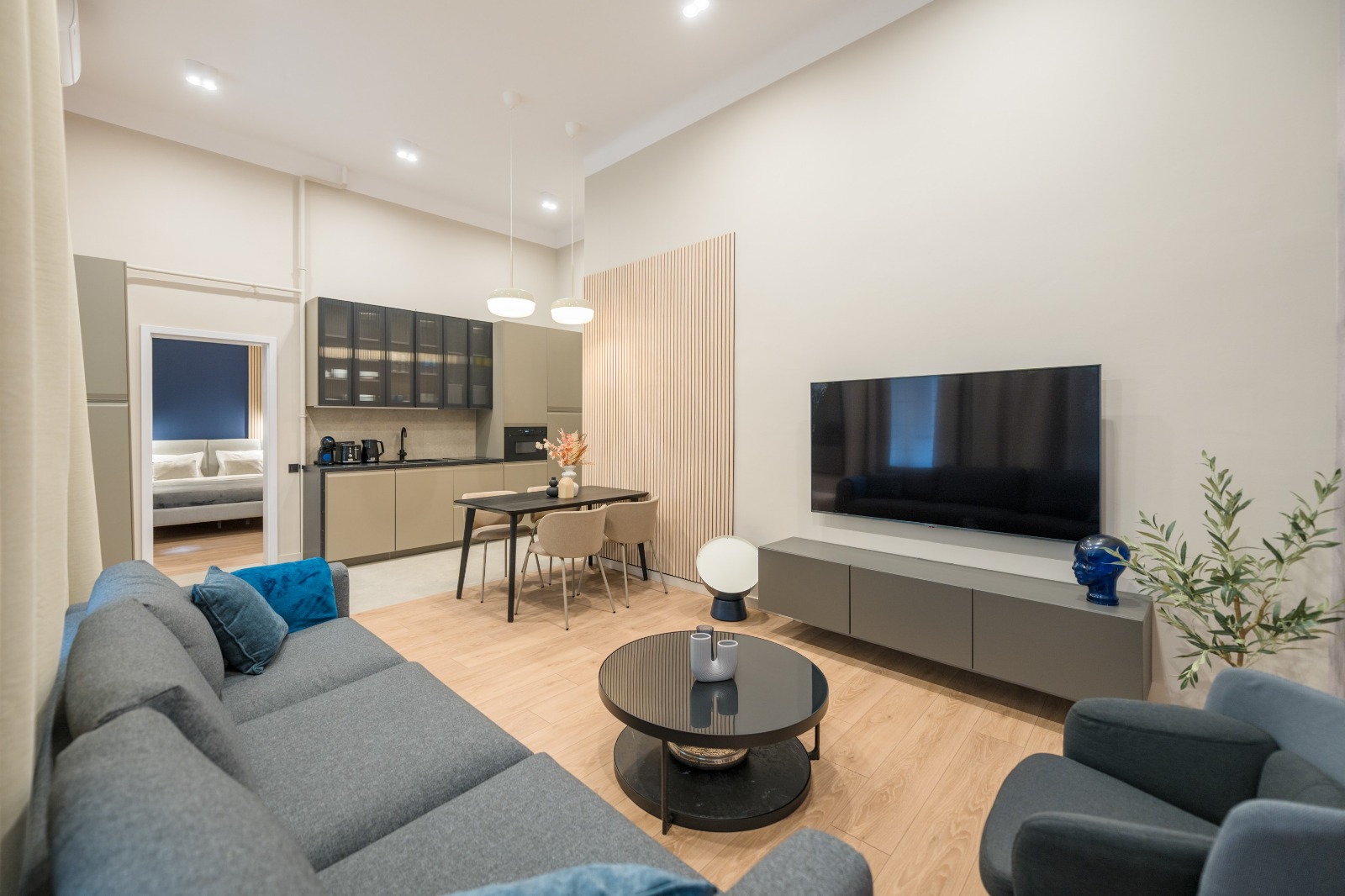
An Airbnb has to be fully equipped: several sets of bedding, crockery, kitchen appliances, towels, curtains, even an iron. This line item often catches owners out, because it does not sit in the renovation budget — yet it is just as much a start-up cost.
For long-term rental, the Budapest market generally expects a fitted kitchen, appliances and basic lighting; many tenants prefer to bring their own furniture. A partly unfurnished flat often means a longer tenancy, because a tenant who has settled in with their own belongings is slower to move on.
Budget and returns
Both routes start from the same two cost brackets: cosmetic renovation at 120,000–180,000 Ft/m², full renovation at 220,000–320,000 Ft/m². The difference is that for Airbnb a full renovation almost always pays back, whereas for long-term rental the cosmetic level is often enough to reach the market rent.
What if you have not decided yet?
This is more common than you would think — many owners want to see how the market moves. In that case we suggest building the structural and mechanical layer to Airbnb standard (good flooring, enough sockets, a proper lighting layout) and leaving the furnishing until last. Decisions buried in the wall are expensive to revisit; furniture can be carried in at any point.
About the prices: the figures in this article are averaged guide values, net of VAT, valid as of the publication date — 20 August 2026. They come from the ConSol price list and are not an offer: the final amount depends on quantities, the condition of the property and the materials chosen. We give an exact price after a site visit.
Frequently asked questions
The construction itself is not necessarily more expensive — the difference shows up in material quality and furnishing. Full equipping (bedding, crockery, textiles, small appliances) is a separate start-up cost not included in the renovation quote.
Yes, but decisions buried in the wall — lighting layout, socket count, floor finishes — are expensive to change afterwards. If you are undecided, it is worth designing the mechanical and electrical layout to the higher standard from the start.
In central locations Airbnb typically yields more, but requires daily operation and active management. In outer districts, or if you have no capacity to operate it, long-term rental is the more stable option.