"Which tile should I choose?" is almost always a question about looks: colour, pattern, brand. Rarely does it come up that the choice of material changes the labour cost too, sometimes by more than the material itself. This article covers where size and type matter on the construction side, not just in the catalogue.
Flooring: where labour barely changes
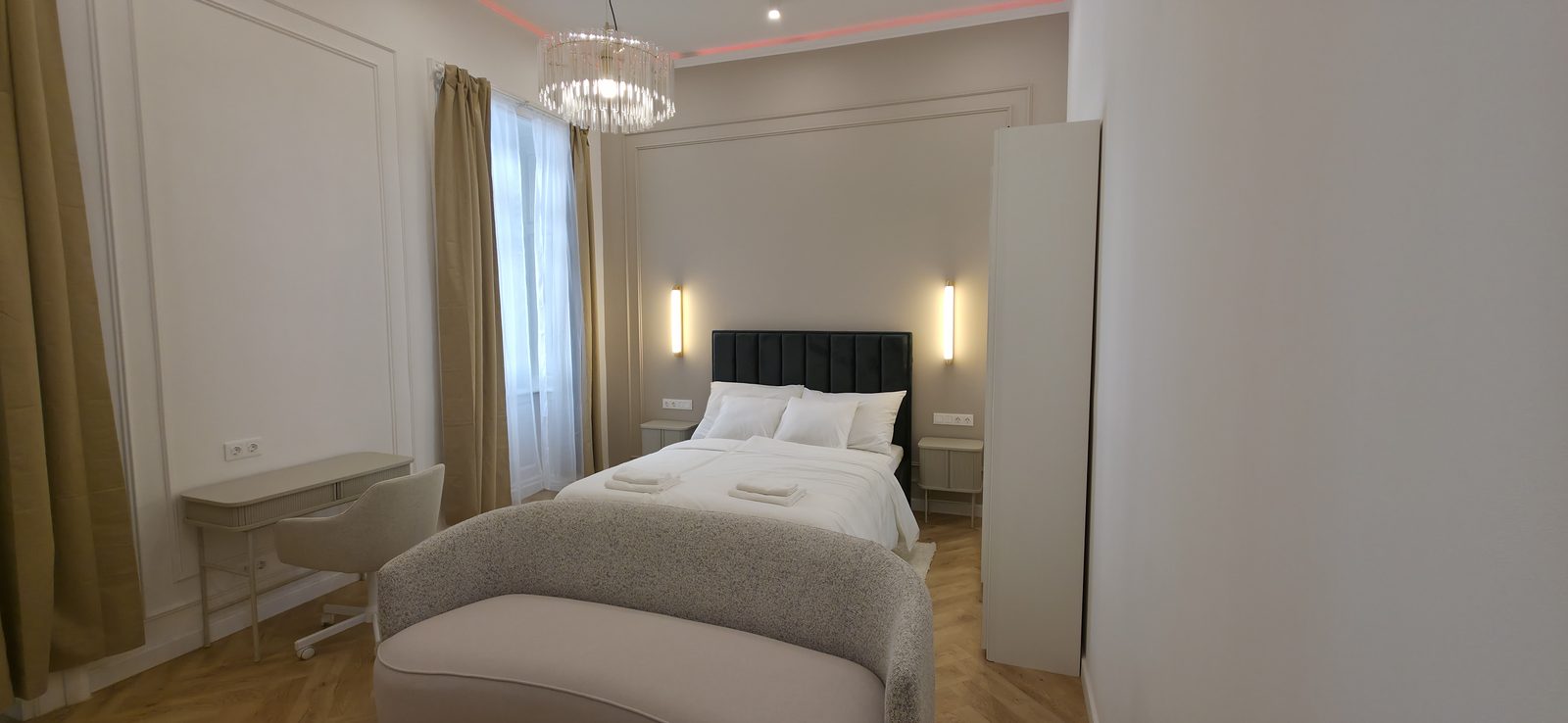
Laying laminate flooring and fitting the skirting are two separate lines. The rate is practically independent of the decor or thickness you choose — the laying work stays the same; the difference shows up only in the material price.
With parquet, it is different: the laying pattern (straight, herringbone) and the board thickness already add to the labour time, and we always price that individually against the pattern chosen.
Tile: where format raises the labour rate too
This is where the biggest misconception sits. Tiling in large format (over 60×60 cm) or in a diagonal/mosaic layout carries a higher labour rate than a standard size — not because the material costs more, but because the work does: heavier boards, more cutting, far less tolerance for an uneven surface.
| Item | Unit |
|---|---|
| Tiling, standard size | m² |
| Tiling, large format / pattern | m² |
| Substrate preparation under tile | per hour/person |
On a 15 m² bathroom wall that adds up to a noticeable difference between standard and large format — before you have even picked a tile. If the surface is not flat (see our article on what demolition reveals), large format shows that off more than small does.
Walls: paint or wallpaper
Paint itself is a cheap item, but the surface preparation behind it — priming, filling, sanding — makes up most of the real cost. We covered this in detail in our article on what a quote includes.
Hanging wallpaper on a prepared surface is a cheaper line than paint's final step, but the surface preparation underneath is needed just the same. Wallpaper here is not a saving; it is a different look on the same preparation.
Doors: the least considered item
Fitting an internal door with its frame and fitting an entrance door are lines of their own. They stay hidden in most quotes inside a single "doors" line, while for six doors it already adds up to a serious sum — for fitting alone, before the cost of the doors themselves.
How to choose when labour matters too
Four questions worth asking about any material before deciding:
Is it a standard size? A non-standard size almost always means higher labour.
Patterned or plain? Matching a pattern is extra labour time regardless of the material price.
What is the surface underneath? If the wall or floor is not flat, large or glossy material shows it off more.
Who is supplying it? If you bring the material, quantities have to match the quote exactly — where they differ we cannot take responsibility for fit.
It is always worth starting the decision by coordinating the furniture layout and the finishes together, not the other way round — we wrote about this in our article on kitchen renovation too.
Frequently asked questions
Not because of the material: large boards are heavier, need more cutting, and tolerate an uneven surface far less. That is extra labour time, which is why the rate is higher.
Yes, many clients do. The condition is that quantity and dimensions match the quote exactly — where they differ we cannot take responsibility for fit.
The hanging itself is, but the surface preparation — priming, filling, sanding — is needed for both just the same. Wallpaper gives a different look, not necessarily a cheaper result overall.
Because the catalogue figure does not reflect how much harder the material is to work with. For patterned, large-format or non-standard material, always ask about the labour rate too.
Yes — at survey we tell you which size or type carries a higher labour rate on your specific surface, so that is known before you decide.