"How long will it take?" is the second question after price. The usual answer is "it depends", which is true and useless in equal measure. This article is about what exactly it depends on, what numbers to plan with, and which few things actually cause delays in practice.
Realistic timelines by size and depth
The length of a renovation is not proportional to floor area but to the depth of intervention. The same 60 m² can be three weeks of work or five months — the difference is whether you touch the building services and the layout.
| Type of work | Floor area | Realistic timeline |
|---|---|---|
| Cosmetic (paint, flooring, doors) | 40 m² | 3–4 weeks |
| Full renovation including services | 60 m² | 12–20 weeks |
| Premium finish with bespoke elements | 80 m² | from 16 weeks |
These are not marketing figures but the deadlines we give on the basis of our own projects and commit to in the contract. The exact date always follows the survey — but the order of magnitude is visible from this alone.
A real example and what it reveals
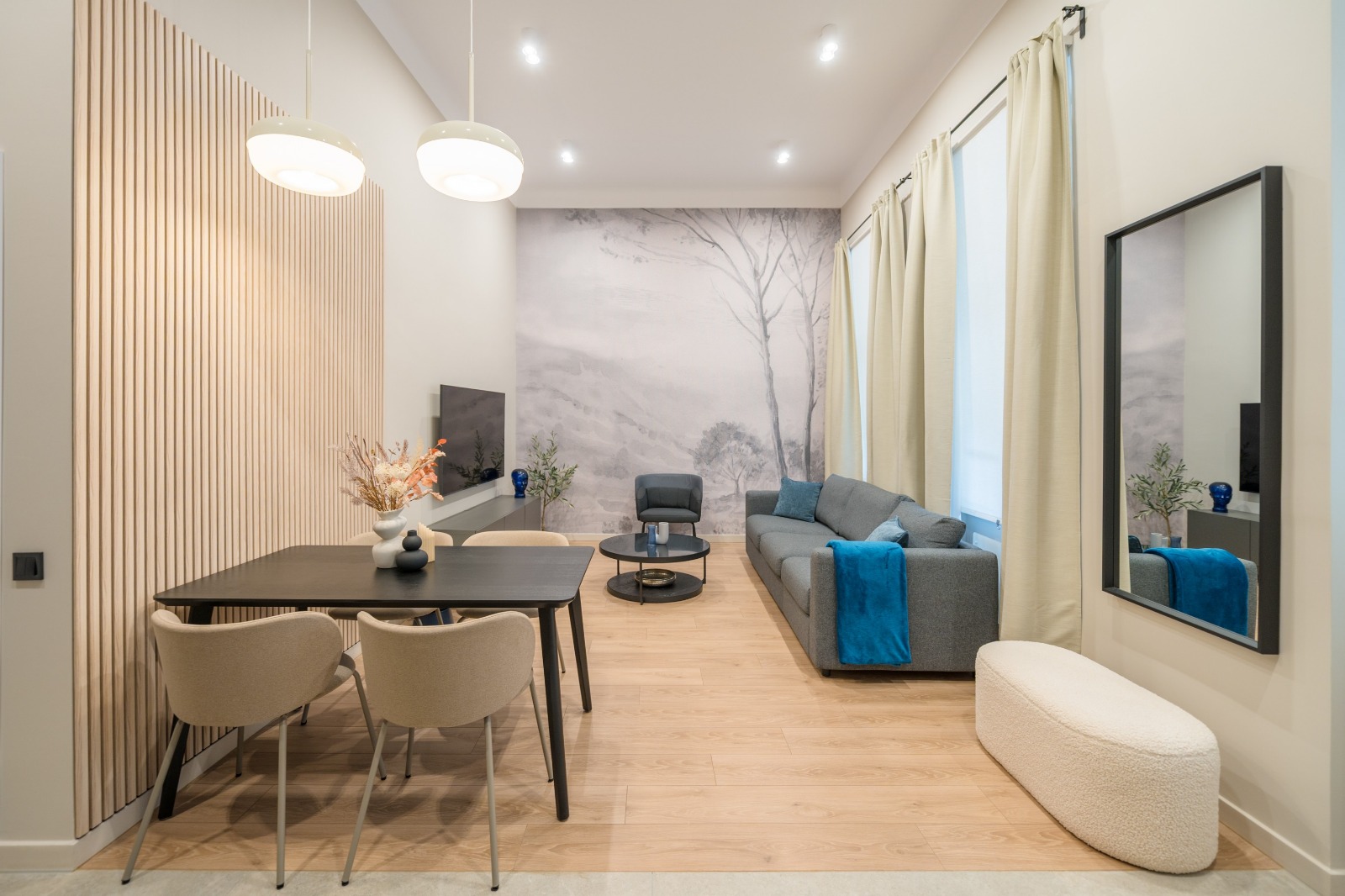
Our Bezeredj utca apartment is 46 m²; the work was completed in five weeks. At first glance this contradicts the table above, where a full renovation starts at twelve weeks.
The explanation is in the depth of the work: that project sits on our own scale at the top of the cosmetic band, not the full-renovation one. In other words, the flat did not change its layout — it changed surfaces and service end-points. That is the level that realistically finishes in five weeks.
What actually consumes the time
The working days matter less than the pauses between them. Four things cause most delays, and none of them is a shortage of labour.
Drying times. Screed, plaster and filler cannot be hurried. This is technological time: tile over it early and the finish fails within months. It has to be planned in, not trimmed away.
Material delivery. Tile held in stock arrives tomorrow; made-to-order tile can take eight weeks. The same goes for bespoke furniture and windows. The most common source of delay is not the contractor but a material decision taken late.
Condominium and authority approvals. If the work touches common property, the general meeting or the building manager moves at its own pace, not yours. We covered this in more detail in our article on permits.
Changing decisions mid-project. Every change throws the chain back: a new material order, a new allocation of trades, sometimes demolition. This is the only factor entirely in the client's hands — and precisely why a design project before the work pays for itself.
Why more people does not always mean faster
It is tempting to assume that twice the crew finishes in half the time. In practice that holds for some stages and not for others, because the order of trades is fixed. The electrician cannot work until the walls stand; the tiler cannot start until the screed is dry. In a 60 m² flat, three to five people can realistically work at once — beyond that they are in each other's way.
What does genuinely speed things up is running rooms in parallel. While the screed dries in the bathroom, plasterboarding can proceed in the living room. That requires every material to be on site — which brings us back to decisions.
What comes after the deadline
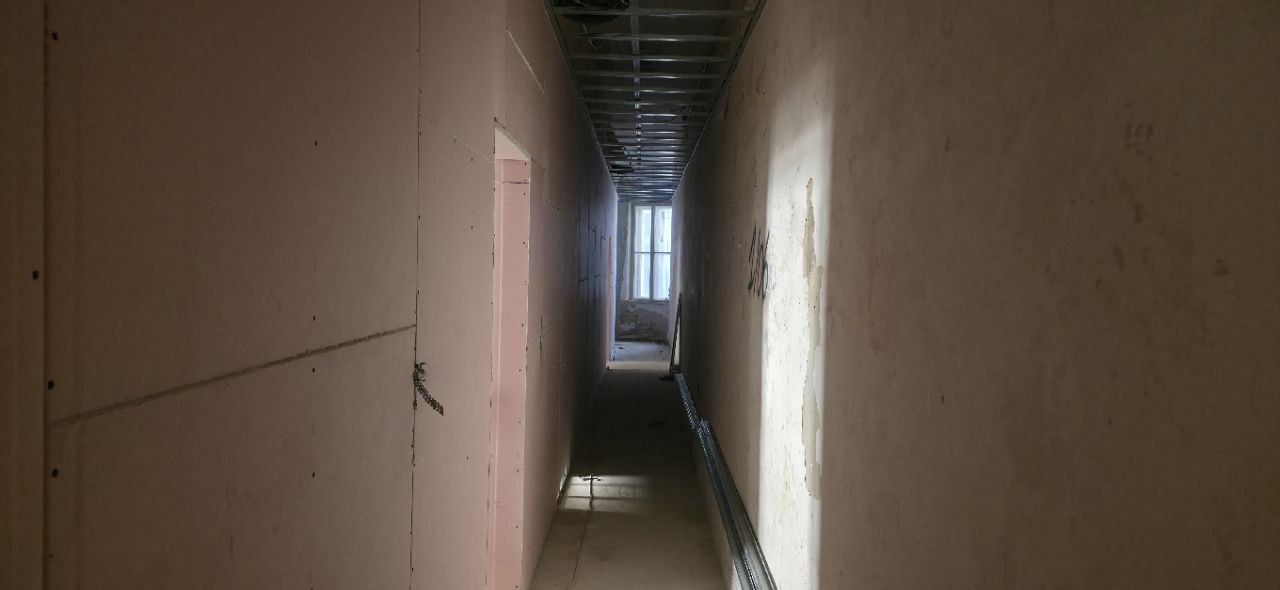
Planning usually leaves out the last few days of a project: cleaning and debris removal. A mid-sized flat renovation produces one to three skips of rubble, and then there is the deep clean before moving in. Not a long time, but not zero either — and it surfaces at the worst possible moment if you have not accounted for it.
At ConSol the deadline is part of the contract, with a penalty for delay — a commitment rather than a promise. In return the schedule binds both ways: material decisions have their own deadlines, because one late link drags the rest with it.
Frequently asked questions
At cosmetic level, four to six weeks; a full renovation including services, twelve to twenty weeks. We give the exact deadline after the survey and fix it in the contract with a penalty for delay.
Partly. The order of trades is fixed, and in an average flat three to five people can work meaningfully at once. Real acceleration comes from scheduling rooms in parallel, which requires every material to be on site.
Material deliveries and decisions changed mid-project. Made-to-order tile, furniture or windows can take up to eight weeks, which is why we ask for material choices to be closed before work starts.
Yes, they are part of the project. A mid-sized flat produces one to three skips of rubble, and the deep clean before handover also takes time — both appear separately in the schedule.
With us the deadline is a contractual commitment with a penalty for delay. Where the delay is caused by a client decision or an official procedure, we record it in writing and agree the new date together.