Lighting is almost always designed last — even though it is the one system that should be finalised earliest. A badly planned light point is not a cosmetic flaw, it is a daily annoyance: a dark worktop, a harsh shadow across a face, or a single ceiling fitting trying to light a 20 m² room. This article covers how many points a room actually needs, and what fitting them costs.
What a lighting point consists of
The fitting itself is priced by your choice. The labour, though, is fixed and the same across fitting types, whether it is a recessed spot, a wall sconce or a ceiling pendant going into place.
| Item | Unit |
|---|---|
| Downlight, wall or pendant fitting | each |
| Track lighting | lm |
| LED strip | lm |
| Chasing for the cable | lm |
| Cable laying | lm |
| Junction box | each |
| Fitting a switch | each |
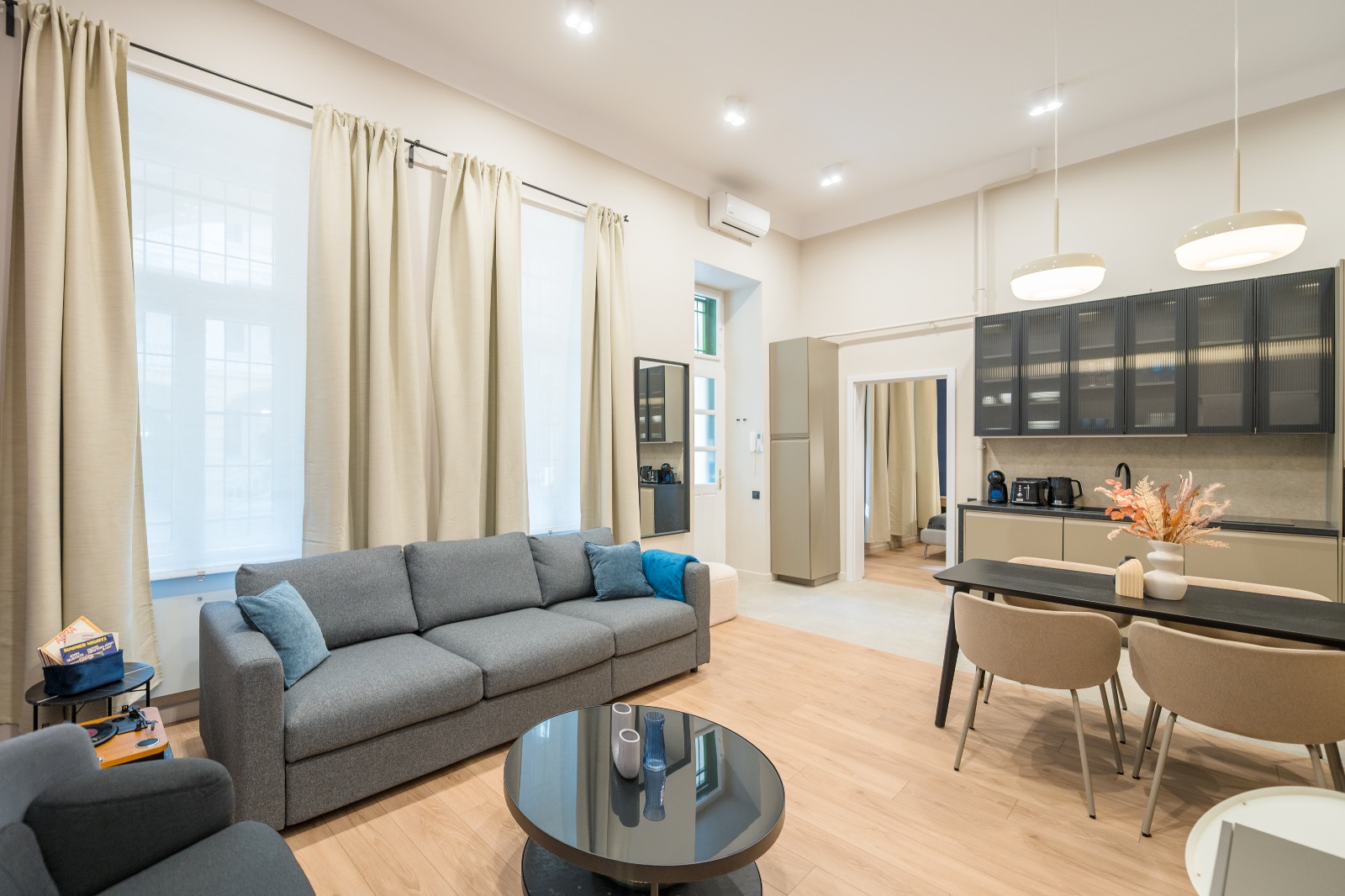
A 15-point living-room-kitchen run — 8 downlights, one pendant, an LED strip over the worktop, 3 switches — already adds up to a noticeable line of fitting labour, before chasing and cable.
Why it has to be decided before the furniture layout
Lighting points have to be chased into the wall and ceiling structure before the plaster goes on. If the furniture ends up somewhere other than what the points were planned for, the downlight lands over the wardrobe, the sconce behind the shelf — and by then it cannot be moved without breaking open the finished wall again. This is exactly why the lighting and switch-group plan is drawn together with the furniture layout, as part of the design project, before any plastering starts.
Layered lighting: why one ceiling fitting is not enough
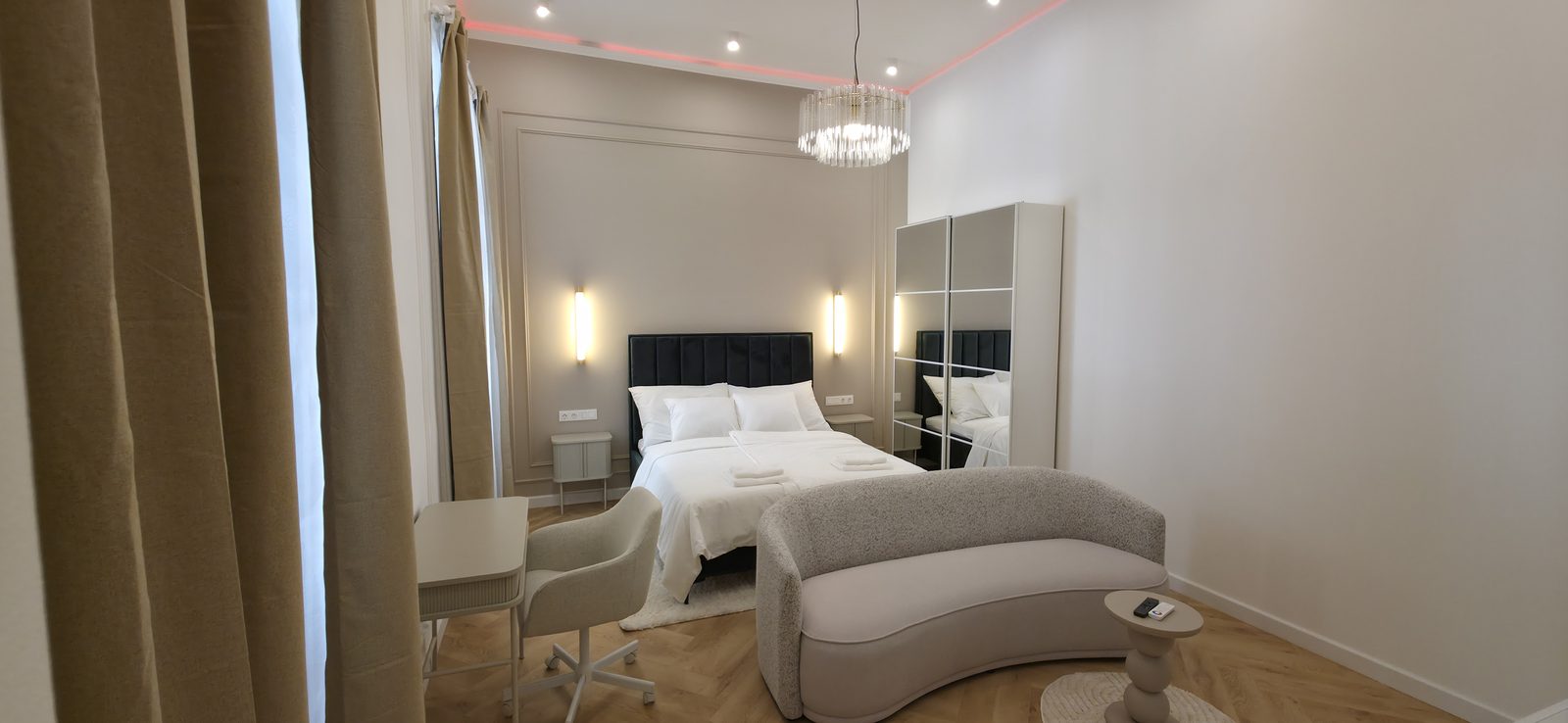
A room that actually works combines three layers: general light (ceiling downlights or a pendant, lighting the whole space) and task light (a worktop, a mirror, a reading corner — focused, strong light exactly where you work). The third is mood light (LED strip, sconces, an indirect band) — this is what makes a room feel lived-in in the evening, without every fitting being on.
A single central ceiling light only covers the first layer — which is why "why is my flat so dark" almost always traces back to missing lighting design, not to the quality of the fitting.
Switches: where people economise, and shouldn't
A single switch is a small item in a large project, which tempts people to wire several circuits onto one switch "to keep it simple". In practice that means every light comes on together in the evening, or none do. Layered lighting only works if the layers can be switched independently.
In a bedroom, a switch on each side of the bed is particularly practical — two extra switches — small change in the budget, and it matters every single night.
How many points a room actually needs
As a guide, per room — this varies with the furniture layout:
Living room (20–25 m²): 6–10 downlights or track sections + 1–2 decorative fittings + 2–3 switches.
Kitchen: see our article on kitchen renovation — the under-cabinet run is its own item there.
Bedroom: 1 central fitting + 2 bedside + optionally cove lighting, on 3–4 switches.
Bathroom: a strip over the mirror + a ceiling downlight, using accessories rated for a wet room (IP-protected).
The exact count is decided before plastering, together with the furniture layout — the one moment a lighting plan can still be changed almost for free.
Frequently asked questions
A 20–25 m² living room typically needs 6–10 downlights or track sections, plus 1–2 decorative fittings, on 2–3 separate switches. The exact number depends on the furniture layout and ceiling height.
Because the cable has to be chased under the plaster. In a finished, painted wall, one extra point means not just the fitting labour but reopening, re-plastering and repainting the wall too.
Downlights are priced per fitting; track is priced per linear metre, with any number of heads added on top. Track earns its cost where the position of light points may still change later.
Because layered lighting only works if general, task and mood light can each be switched independently. On one shared switch, that logic collapses.
At survey we work out, together with the furniture layout, how many points and what type each room needs, then give you an itemised price for the fitting based on that.