Two quotes for the same flat, with a twofold difference between them. The client's logical conclusion is that one of them is overpriced. In reality the most common reason is different — the two quotes do not cover the same work. This article is about what sits behind a line item, and what routinely gets left out.
If you are looking instead for how much to set aside for the renovation as a whole, we cover that in our article on planning your budget — the two complement each other rather than replacing one another.
"Wall painting" — five lines rather than one
Take the simplest item everyone recognises. A quote may show it as a single line: "wall painting, per square metre". But you can only paint a prepared surface, and preparation is a trade of its own.
| Stage | Why it is needed |
|---|---|
| Priming | Without it filler and paint do not bond properly |
| Filler, base coat | Levelling the surface; usually one to two coats |
| Filler, finish (2 coats) | This is what makes the surface paintable |
| Sanding | Without it paint reveals every ripple |
| Painting, 2 coats | The visible work itself |
So that "painting per square metre" is in reality several times as much labour once wall preparation is included. Neither quote is lying — one prices the whole process, the other only its final step.
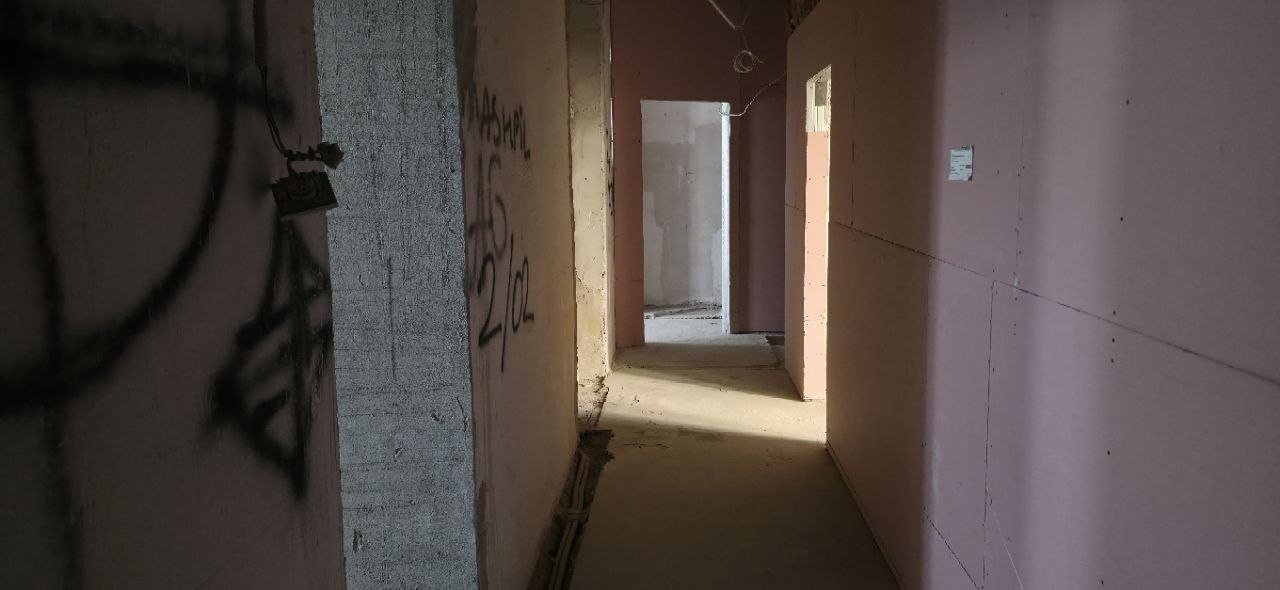
What almost every cheap quote omits
Four items that are not glamorous but always arise. Their absence from a quote does not mean they will not happen — only that they are not in the total.
Debris removal. Charged per skip. A mid-sized renovation takes one to three — a line of its own that many quotes simply do not mention.
Moving materials. Tile, plasterboard and bagged goods have to be carried up — in an old building without a lift this is a noticeable item, charged by the hour per person.
Deep clean before handover. Charged per square metre: over a 60 m² flat it adds up, and it tends to surface right at the end of the project.
VAT. Trade price lists quote net figures. The 27% is very visible on the total — always ask whether the number in front of you is gross or net.
Labour and materials: why always separate
In ConSol quotes, labour and material costs appear on separate lines. That is not a formality but a condition of the fixed price: the cost of materials depends on your decisions — the tiling labour is the same whether you lay cheap or far more expensive tile on it.
Large-format or patterned tile, however, does raise the labour rate: more cutting, heavier boards, and far less tolerance for an uneven substrate. That is why we always ask the tile size before quoting.
The five lines to check first
If you have little time to compare two quotes, start here. In our experience, seven times out of eight the difference is hidden in one of these.
1. Wall preparation. Are priming, filling and sanding included, or only the painting.
2. Demolition and wall condition. Who pays if stripping the old plaster reveals that re-plastering is needed, at a rate that depends on thickness.
3. Volume of electrical work. Chasing, cable and socket are three separate items. Ten new sockets is no longer a rounding error.
4. Doors. Fitting an internal door with its frame is a line of its own — over six doors it becomes a serious sum.
5. Project close-out. Debris, cleaning, material handling — see above.
Fixed price or measured account
A fixed price means the final invoice equals the quote. It can only be committed to when every item is known — that is, when there is a detailed design and a survey. This is why we say a design project is not a cost but a condition of the fixed price.
Where that is missing — in an old building, before demolition, with hidden defects suspected — the honest answer is a measured account with unambiguous unit rates, not a "fixed" sum that will be revised anyway. The difference is not in the price but in whether you know in advance what will happen.
If you have two quotes in front of you and cannot tell what they mean, send them to us. We will go through them line by line — we wrote more about this in our article on choosing a contractor.
Frequently asked questions
Most often because it does not cover the same thing. With us, surface preparation, debris removal, material handling and the final clean appear as separate lines. If those are missing from the other quote, that is not cheaper work — only a shorter piece of paper.
Our price list is net; 27% VAT appears as a separate line on the quote. Always compare the gross total when weighing two offers.
Either works. Buying them yourself typically saves 10–15%, but quantities and dimensions must match the quote exactly — where they differ we cannot take responsibility for fit.
Under a fixed-price contract, no — unless you request additional work or a hidden defect appears during demolition. In both cases we send photo documentation and a written amendment first, and continue only after approval.
Two to three working days after the survey. You receive an itemised Excel sheet where every line is listed separately, not a single total.